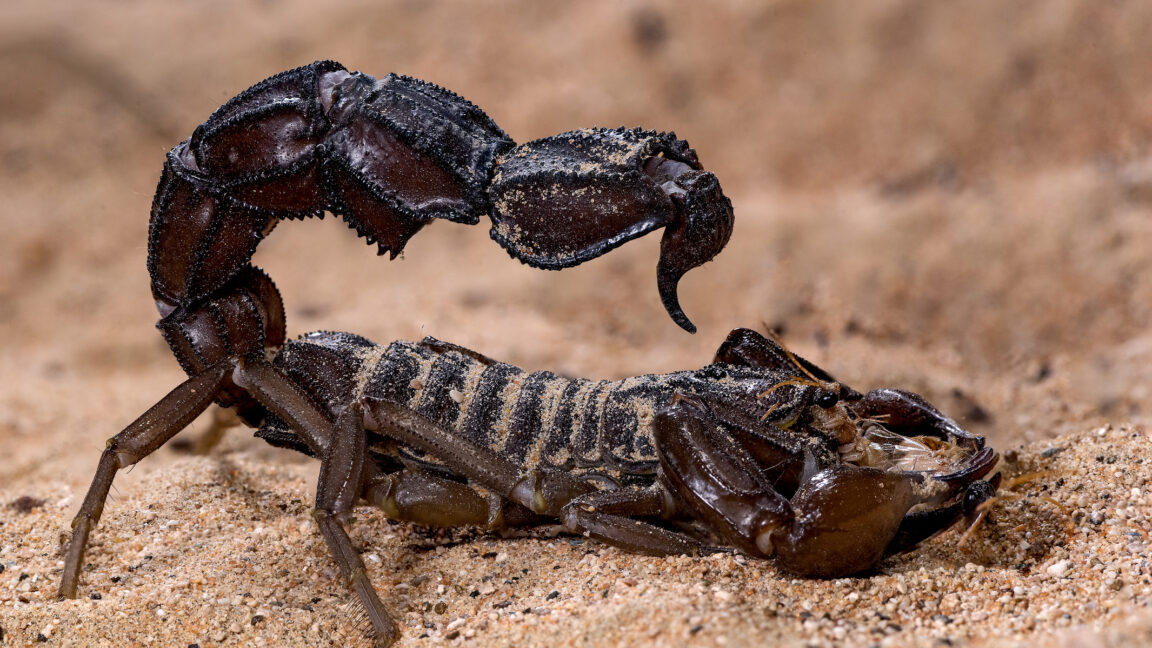
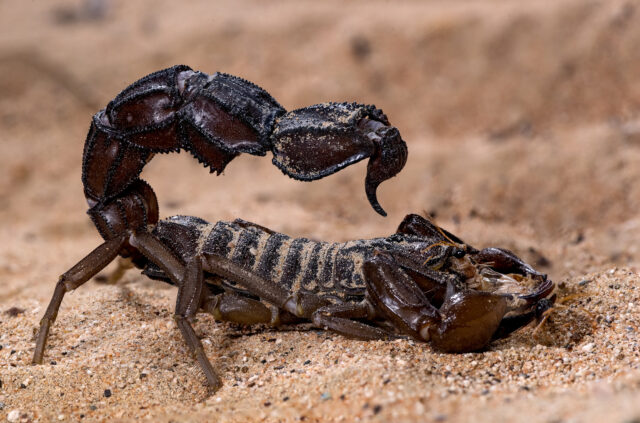
Scorpions have long been recognized for their formidable dual pincers and venomous stingers, but recent research reveals that these ancient arachnids take self-defense to a whole new level. Scientists have discovered that the outer layers of their chelae (pincers) and telson (stinger) are infused with key metals like zinc, manganese, and iron. This isn't mere environmental contamination—it's a deliberate biological adaptation that effectively turns their natural weapons into reinforced tools, reminiscent of a sci-fi upgrade. In this Q&A, we explore the fascinating findings from a 2023 study that unravels how and why scorpions evolved this metal reinforcement.
1. Which specific metals have been found in scorpion pincers and stingers, and why are they significant?
Chemical analyses of scorpion exoskeletons, particularly in the pincers (chelae) and the stinger (telson), have consistently revealed the presence of zinc, manganese, and iron. These metals are not evenly distributed across the entire body; they are concentrated precisely at the tips of the pincers and the sharp point of the stinger. The presence of zinc is especially important because it hardens the outer cuticle, making these appendages more resistant to wear and breakage. Manganese contributes to structural stability, while iron may provide additional strength or even magnetic properties. Together, these metals act like natural armor plating, allowing scorpions to dig, crush prey, and inject venom with reduced risk of damaging their own weapons. This discovery shifts our understanding of arthropod exoskeletons from simple chitin to sophisticated composite materials.
2. How do scorpions acquire these metals—do they extract them from their environment or produce them internally?
The question of whether scorpions intentionally incorporate metals or simply accumulate them from the soil has puzzled biologists since the 1990s. A recent study led by Sam Campbell at the University of Queensland addressed this head-on. By analyzing the distribution of metals across different species and comparing it with environmental metal levels, the team found a clear, non-random pattern. Scorpions actively bioaccumulate these metals from their diet and the surrounding soil, then transport and deposit them specifically at the tips of their pincers and stingers during molting. This is a controlled biological process—not accidental contamination. The metals are stored in specialized cells and integrated into the cuticle. Moreover, scorpions from metal-poor environments still showed elevated levels in their weapons, confirming that they selectively concentrate what they need rather than passively absorbing whatever is available.
3. What evolutionary advantage does metal reinforcement provide to scorpions?
Reinforcing their weapons with metals gives scorpions several key survival benefits. First, it dramatically reduces wear and tear from repeated use—pincers that regularly crush hard-shelled prey (like beetles) and stingers that pierce tough exoskeletons would otherwise dull or break. Second, the increased hardness allows scorpions to exert greater force without fracturing their own tools, improving hunting efficiency. Third, metal-reinforced stingers can deliver venom more effectively because the tip remains sharp longer. This adaptation is particularly valuable for species that live in harsh, resource-limited environments where a broken weapon could mean starvation. The study suggests that this metal-enrichment trait evolved multiple times across different scorpion lineages, indicating strong selective pressure. In essence, scorpions became nature's terminator by giving themselves a built-in upgrade that enhances both offense and defense.
4. Did the study examine multiple scorpion species, and what did the differences reveal?
Yes, the research team looked at several scorpion species from diverse habitats, including forest, desert, and cave-dwelling forms. They used advanced imaging and chemical analysis (such as energy-dispersive X-ray spectroscopy) to map metal distribution at microscopic resolution. The key finding was that all species studied showed strong metal enrichment in the weapon tips, but the exact concentrations varied. For instance, species that rely heavily on burrowing or crushing hard prey had higher zinc levels in their pincers, while those that primarily sting had more zinc in their telson. Cave-dwelling scorpions, which face different substrates and prey, showed slightly different metal profiles. This suggests that scorpions can fine-tune the composition based on their ecological needs. The consistent presence of metals across species, despite varying environments, supports the idea that this is an evolved trait rather than a passive accumulation.
5. How does this metal reinforcement compare to similar adaptations in other animals?
Scorpions are not alone in using metals to harden body parts. Many arthropods, such as spiders (zinc in fangs), beetles (zinc and manganese in mandibles), and even some marine worms (copper in jaws), have evolved metal-enhanced cuticles. However, scorpions are unique in that they integrate multiple metals (zinc, manganese, iron) into distinct areas of the same organ. For example, the pincer tip might have a different metal ratio than the stinger tip. This layered strategy is reminiscent of human-made composite materials. Additionally, while some animals incorporate metals during growth (like snails with iron in their radulae), scorpions achieve their reinforcement through a molting process, shedding and rebuilding their exoskeleton with each developmental stage. Understanding how scorpions accomplish this could inspire new materials science, such as self-repairing coatings or lightweight armor.
6. What are the practical implications of this research for materials science and technology?
The scorpion's ability to precisely deposit metals into a chitin matrix has caught the attention of bioengineers. By studying the molecular mechanisms behind this process, scientists hope to develop new manufacturing techniques for hard, lightweight composites. For example, if we can replicate the way scorpions control the spatial distribution of zinc within a chitin-like polymer, we could create self-sharpening cutting tools or more durable prosthetic joints. The research also opens avenues for creating biodegradable materials that are both strong and environmentally friendly. Furthermore, understanding how scorpions recycle metals during molting could lead to more efficient recycling processes in industry. While still in early stages, this natural blueprint offers a sustainable alternative to traditional metal alloys that require high-energy processing.
7. Could artificially boosting the metal content of scorpion weapons have any practical use in pest control or venom extraction?
Directly manipulating scorpion weapon hardness is unlikely to be practical for pest control, but the research could indirectly benefit venom extraction and antivenom production. Currently, venom is collected by manually stimulating the stinger—a process that can damage the animal. If we better understand the mechanical properties of the telson, we can design less harmful extraction devices. Additionally, insights into metal reinforcement might help breed scorpions with healthier, stronger weapons in captivity, improving the welfare and yield of venom farms. For pest control, the findings are more ecological: knowing that scorpion weapons are optimized for certain prey could lead to biological controls targeting the prey species rather than the scorpions themselves. However, no direct application for boosting metal content in wild populations is anticipated—the evolution has already fine-tuned their weapons perfectly.