Introduction
Lightning has fascinated and frightened humans for millennia. But what really causes those brilliant streaks across the sky? Thanks to researchers like physicist Joseph Dwyer, who transitioned from studying solar flares aboard NASA's Wind satellite to investigating Florida's thunderstorms, our understanding has deepened—and grown more complex. This how-to guide will walk you through the step-by-step process of lightning formation, from simple cloud physics to cutting-edge theories involving high-energy particles. By the end, you'll grasp why the answer to 'what causes lightning?' keeps getting more interesting.
What You Need (Prerequisites & Materials)
- A basic understanding of electricity (positive and negative charges)
- Familiarity with weather concepts (clouds, updrafts, precipitation)
- Curiosity about atmospheric physics and recent research
- Optional: access to a computer to explore animations or simulations
Step 1: Understand Charge Separation in Thunderclouds
Lightning begins inside a cumulonimbus cloud. Updrafts carry tiny ice crystals upward, while larger hailstones and graupel (soft hail) fall. As they collide, electrons are transferred: lighter ice crystals lose electrons (become positively charged) and rise, while heavier graupel gains electrons (become negatively charged) and sinks. This separates charge: the top of the cloud becomes positive, the bottom negative. A similar opposite charge builds up on the ground below, attracted by the negative cloud base.
Step 2: The Electric Field Intensifies
As charge separation grows, the electric field between cloud and ground becomes enormous—typically hundreds of thousands of volts per meter. Air normally insulates, but when the field exceeds about 3 million volts per meter, the air can break down. However, measurements show lightning often strikes at lower fields, which puzzled scientists for decades. This discrepancy led to Dwyer's key insight: relativistic particles may help trigger breakdown at lower field strengths.
Step 3: The Stepped Leader Emerges
Before the visible flash, a faint, branching channel called a stepped leader descends from the cloud. It moves in quick, 50-meter steps, each step ionizing air. As it nears the ground, positive streamers rise from tall objects like trees or buildings. When they connect, a complete conductive path forms. But how does the leader start? This is where Dwyer's research on runaway breakdown comes in.
Step 4: The Role of Runaway Breakdown (Dwyer's Contribution)
Working in Florida, Dwyer applied his knowledge of high-energy particles from the sun to earthly lightning. He proposed that cosmic rays—energetic particles from space—collide with air molecules, producing a cascade of relativistic electrons. These electrons, moving near the speed of light, can outrun slower electrons and create a runaway avalanche, ionizing a path for the stepped leader. This explains why lightning can begin in electric fields lower than the traditional breakdown threshold. The mechanism is similar to what he studied in solar flares, but now it powers storms on Earth.
Step 5: The Return Stroke Generates the Flash
Once the leader completes the circuit, a massive current surges upward from ground to cloud—the return stroke. This is the brilliant flash we see, lasting a few microseconds but carrying tens of thousands of amperes. The sudden heating (up to 30,000 K) expands the air explosively, creating thunder. Often multiple return strokes follow in rapid succession along the same channel, giving lightning its flickering appearance.
Step 6: After the Flash – Continuing Current and Propulsion
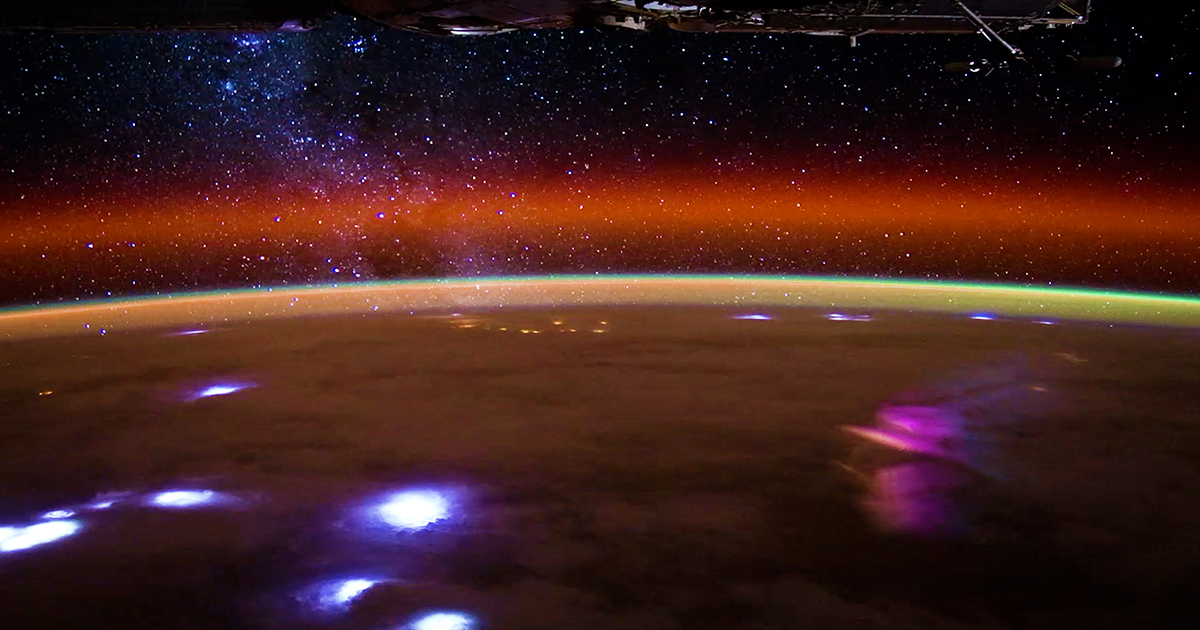
In some strokes, a lower, steadier current flows for hundreds of milliseconds, called a continuing current. This can cause ground fires or damage structures. Dwyer and colleagues also study how lightning sometimes propagates upward from tall objects, and how thunderstorms generate gamma-ray flashes. Their satellite observations have revealed that lightning is a more complex, energetic phenomenon than earlier models suggested.
Step 7: Ongoing Mysteries and Future Research
Despite these steps, many questions remain. How exactly do cosmic rays trigger breakdown? Why are some storms more lightning-prone? Can we predict lightning strikes better? Dwyer's work shows that lightning cannot be understood in isolation—it connects space weather, atmospheric electricity, and cloud dynamics. Future research using high-altitude balloons, aircraft, and satellites will continue to unravel the mystery.
Tips for Understanding and Staying Safe
- Stay curious: Lightning research evolves quickly; follow updates from universities and NASA.
- Stay safe: If you hear thunder, go indoors. Avoid open fields, tall trees, and water.
- Use the 30-30 rule: After seeing lightning, count to 30; if you hear thunder before 30, go inside. Wait 30 minutes after the last thunder.
- Visualize the steps: Sketching the charge separation and leader process can reinforce understanding.
- Explore online simulations: Many educational sites let you see how lightning forms interactively.
In summary, lightning is a awe-inspiring natural phenomenon whose explanation has grown richer thanks to scientists like Joseph Dwyer. By following these steps, you now know not only what causes lightning but also the exciting research that continues to reshape our understanding.