Cement production is a cornerstone of modern infrastructure, but it comes with a hefty environmental price tag. Generating about 8% of global CO2 emissions, the cement industry is under immense pressure to decarbonize. While better efficiency and renewable energy can help, a stubborn problem remains: the very chemical reaction needed to make cement releases CO2. Now, a groundbreaking paper in Communications Sustainability suggests we might be able to sidestep this issue entirely—by using a different rock. Here are ten essential things you need to know about this promising shift.
1. The Scale of the Problem: 8% of Global CO2
Cement alone is responsible for roughly 8% of all human-made carbon dioxide emissions. To put that in perspective, if the cement industry were a country, it would be the third-largest emitter behind China and the US. This figure has made cement a top target for climate action, but cutting emissions isn't straightforward because they come from two distinct sources: fuel combustion and the chemical process itself.
2. The Stubborn Challenge: Direct Process Emissions
When limestone (calcium carbonate) is heated to make lime (calcium oxide), CO2 is released as a byproduct of the chemical reaction. These so-called "direct process emissions" account for over half of the industry's CO2 output—larger than the emissions from burning fuel to heat the kilns. Even if kilns were powered entirely by green energy, these process emissions would remain, making them the hardest part of the puzzle to solve.
3. The Chemistry Behind the Emissions
The classic reaction involves heating limestone to around 1,450°C. The heat breaks calcium carbonate into calcium oxide and carbon dioxide gas. For every ton of cement produced, roughly 600 kilograms of CO2 are emitted from this limestone breakdown alone. This is an inherent property of the raw material, not something that can be tweaked with better furnaces or cleaner fuels.
4. Portland Cement: A 19th-Century Invention
The standard cement we use today—Portland cement—was developed in the 1820s by Joseph Aspdin. Its recipe calls for heating limestone with clay or coal ash. The resulting clinker is ground into a fine powder that reacts with water to harden. For two centuries, this formula has been the global backbone of concrete, but its carbon emissions were never seen as a liability until now.
5. A Radical Assumption: We Don't Have to Use Limestone
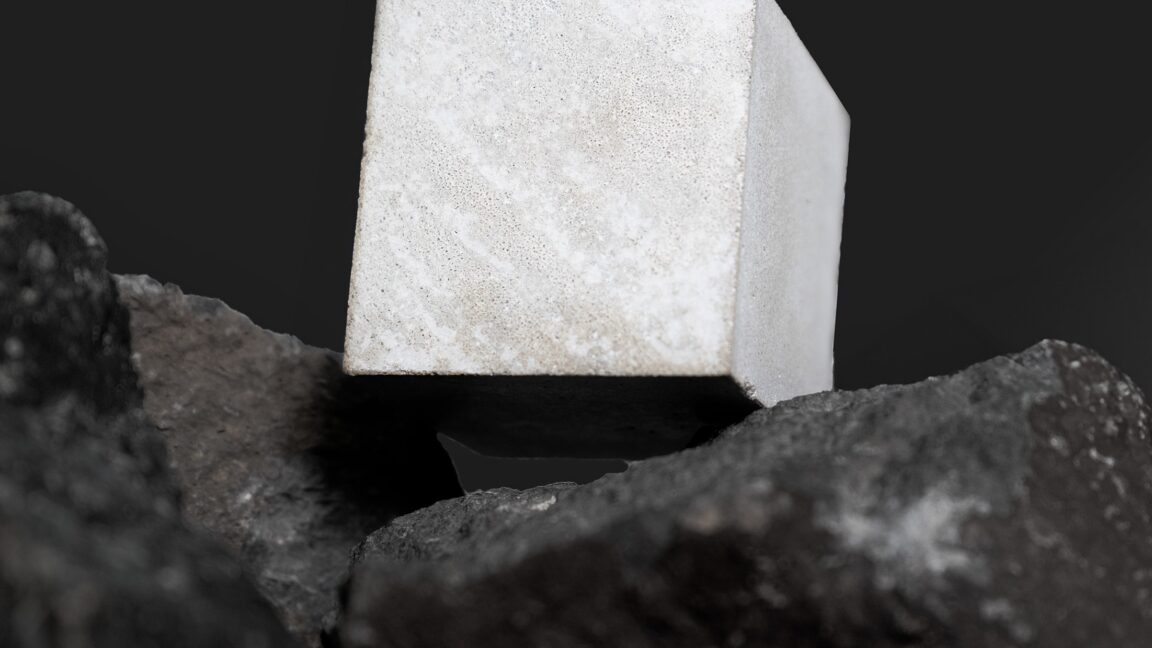
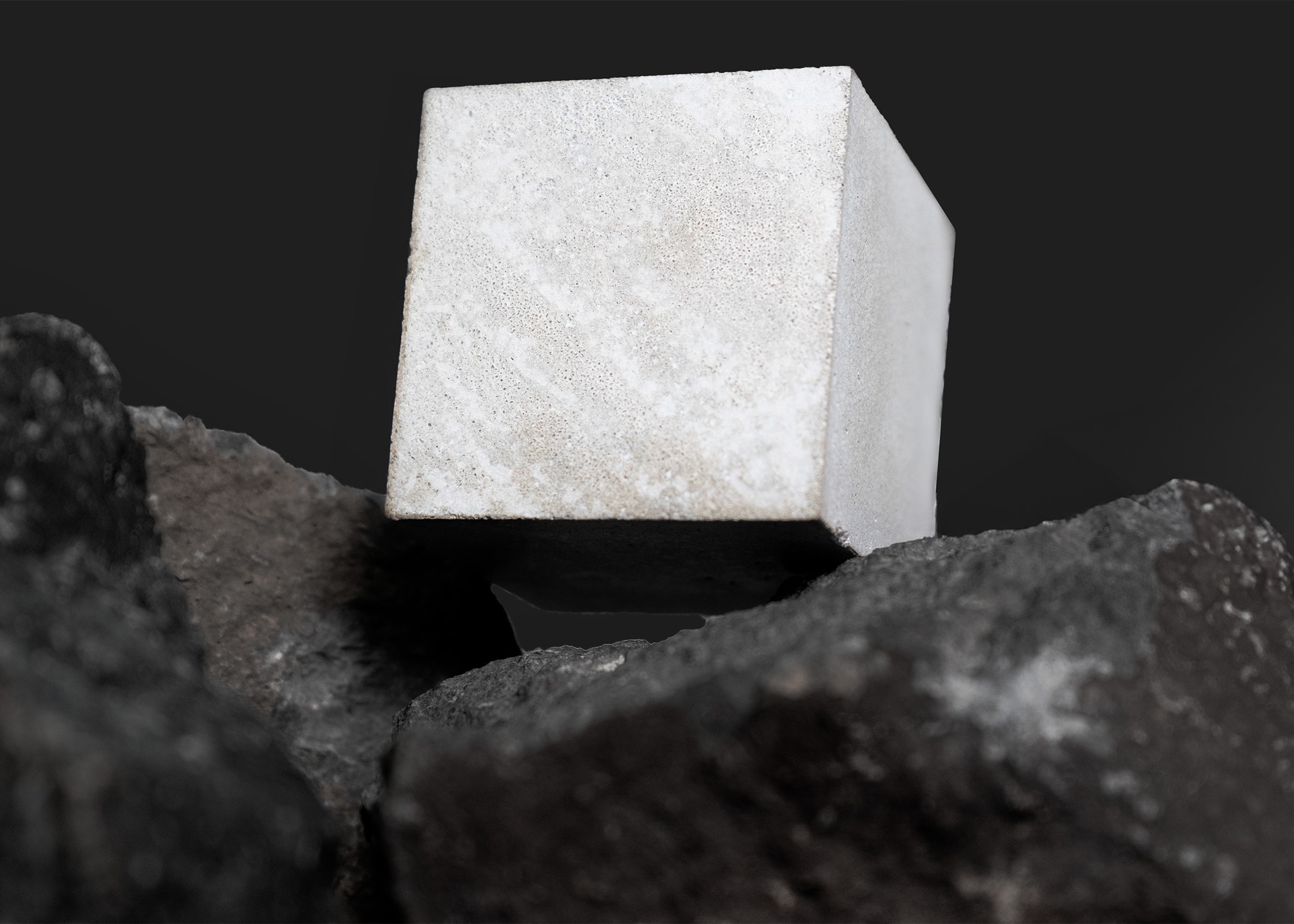
The new paper challenges a bedrock assumption: that cement must be made from limestone. By switching to a different type of rock—one that doesn't contain carbonates—the direct process emissions could be eliminated entirely. This isn't about tweaking the existing process but rethinking the fundamental chemistry of cement. The alternative rock, such as calcium silicates, can form cementitious compounds without releasing CO2 when heated.
6. How Alternative Rocks Avoid CO2 Release
Instead of limestone (calcium carbonate), rocks like wollastonite (calcium silicate) or olivine (magnesium iron silicate) can be used. When heated, these materials don't decompose to release CO2. Instead, they react differently, potentially forming clinker directly without the carbon penalty. Early research suggests that such rocks are abundant and could be processed at lower temperatures, saving energy and emissions simultaneously.
7. The Promise of Near-Zero Direct Emissions
The most exciting aspect is that if the alternative rock route works at scale, direct process emissions could drop to near zero. Combined with renewable energy for kilns, cement production could approach carbon neutrality. That would be a game-changer for the construction industry, which currently relies on carbon-intensive concrete for everything from bridges to skyscrapers.
8. Challenges: Scalability and Material Properties
While promising, the approach faces hurdles. Alternative rocks are widespread but not all can be easily mined or processed with existing infrastructure. The resulting cement must also meet strict performance standards—strength, durability, setting time—that Portland cement has fine-tuned over centuries. Extensive testing and pilot plants will be needed to prove that the new formula can stand the test of time.
9. Synergies with Other Decarbonization Strategies
This rock-switch isn't the only way to clean up cement. Improved energy efficiency, carbon capture and storage (CCS), and alternative fuels (like biomass or hydrogen) are all being pursued. However, those methods still leave the process emissions problem. By tackling the source, the alternative-rock approach offers a complementary avenue that could make CCS unnecessary or reduce its scale.
10. The Road Ahead: From Lab to Factory Floor
The paper in Communications Sustainability is a vital first step, but translating laboratory success into commercial reality will take years. Partnerships between academia, industry, and policy-makers will be crucial to fund research, build demonstration plants, and update building codes. If successful, this shift could cut global CO2 emissions by several percentage points—a dent as significant as taking hundreds of millions of cars off the road.
Cement production doesn't have to be a climate villain. By rethinking the very rock we use, we might unlock a path to sustainable construction without sacrificing the strength and durability that built our modern world. The next decade will reveal whether this bold idea can become a practical reality.