Introduction: The term "Forward Deployed Engineer" (FDE) might sound like a military operation—and that’s no accident. In the fast-paced world of AI, where models are complex and clients can’t always articulate their needs, companies like OpenAI, Anthropic, and Google are aggressively hiring FDEs to bridge the gap. This article breaks down what this role really entails, why it’s trending, and how it differs from traditional software engineering or consulting. Whether you’re considering a career pivot or trying to understand why your AI project is stalling, these seven insights will give you a clear picture of the FDE’s growing importance.
1. What Exactly Is a Forward Deployed Engineer?
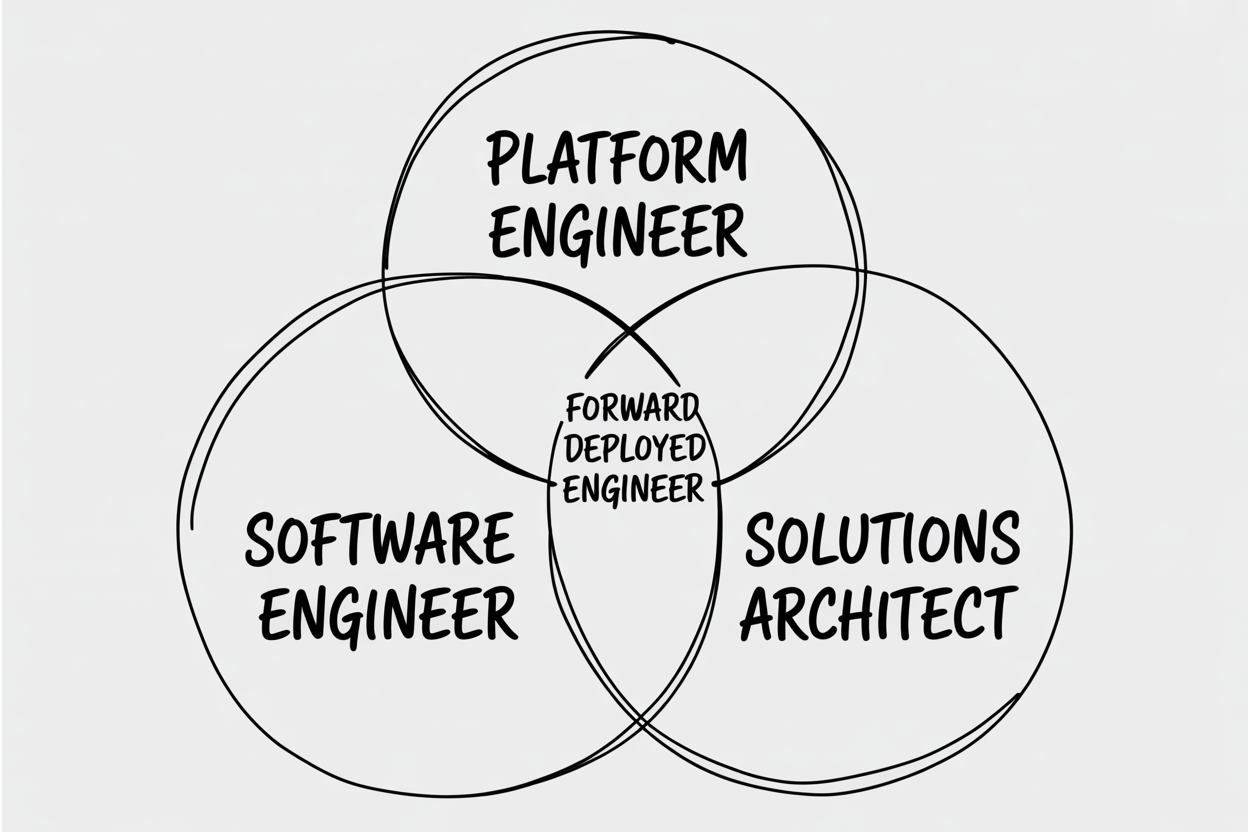
A Forward Deployed Engineer is a software engineer who works directly embedded within a client’s technical and operational environment. This isn't remote documentation writing; the FDE sits alongside domain experts inside the client’s workflows—on-site, hybrid, or inside a client’s cloud or VPC. They write real code that runs in the client’s production systems, and they stay until the system is fully operational. Think of them as a fusion of engineer and field agent, troubleshooting in real time. The role originated at Palantir in the early 2010s to solve a problem that traditional product delivery couldn’t handle: clients who didn’t even know what they needed. Unlike consultants who produce reports, FDEs own the entire implementation process from start to finish.
2. The Palantir Origin Story: Born from Intelligence Agency Needs
Palantir founded in 2003 to help US intelligence agencies manage vast, fragmented datasets—but the challenge wasn’t purely technical. Agencies couldn’t clearly describe their requirements, they couldn’t share data openly, and their workflows changed constantly. A standard software product was useless. Palantir’s solution was to embed engineers on-site, calling them "Deltas." By 2016, Palantir actually had more FDEs than traditional software engineers—a ratio that underscores how central this model was to their business. The FDE concept was inspired by high-end French restaurants: front-of-house staff are deeply integrated with the kitchen and empowered to tell customers "no" if they’re ordering incorrectly. This same philosophy was applied to enterprise software delivery, ensuring that engineers could push back against unrealistic client demands while building exactly what was needed.
3. Why Traditional SaaS Fails for Complex AI Deployments
Standard enterprise software follows a predictable motion: build a product, pitch to clients, onboard via customer success, and let the client integrate internally. This works for CRM tools or analytics dashboards—products with well-documented APIs and large user communities. AI systems break this model completely. A knowledge gap exists on both sides: the client’s engineers know their own business deeply—data schemas, compliance requirements, edge cases—but lack expertise in how AI models behave in production. Meanwhile, AI lab engineers understand prompting patterns, retrieval-augmented generation (RAG) strategies, and model drift, but they don’t know the client’s unique environment. The FDE steps into this void, operating as a translator and builder who can navigate both worlds.
4. FDEs vs. Traditional Consultants: A Critical Distinction
Many organizations hire consultants to analyze problems and write recommendations. A Forward Deployed Engineer is not a consultant. The FDE owns the actual implementation—they build the system, deploy it into production, and ensure it runs reliably. They don’t hand off a 50-page report; they hand over running code. This is a fundamental shift in accountability. While a consultant might identify that your data pipeline is broken, an FDE will write the code to fix it, test it with your real data, and troubleshoot until it works. This ownership mindset is why companies like Palantir and now AI labs are investing heavily in FDE teams. The role demands both deep technical skill and strong soft skills to manage client relationships under pressure.
5. The Restaurant Analogy: Front-of-House Meets Kitchen
Palantir’s founder has compared the FDE model to how a top-tier French restaurant operates. The front-of-house staff (waitstaff, sommeliers) are deeply integrated with the kitchen team—they understand the menu, the preparation, and the limitations. They are empowered to tell a customer “no” if the customer’s order doesn’t make sense (e.g., a well-done filet mignon). Similarly, an FDE has the authority to challenge a client’s request if it’s technically unsound or would lead to poor performance. This isn’t about being difficult; it’s about ensuring that the final product meets both the client’s needs and technical best practices. The result is a collaborative tension that produces better software, faster.
6. The Knowledge Gap in AI: Why FDEs Are Critical in 2026
In 2026, AI models are becoming more powerful but also more finicky. Deploying a large language model or a retrieval-augmented generation system requires understanding prompt engineering, context windows, vector databases, and latency trade-offs. Most client engineering teams don’t have this expertise. Conversely, AI researchers often lack deep knowledge of the client’s legacy systems, regulatory constraints, and domain-specific data quirks. The FDE bridges this gap by being fluent in both: they can talk to a bank’s compliance officer about GDPR and also optimize a GPU cluster for inference. This dual fluency is rare and valuable. It’s why major AI players are competing aggressively for FDE talent—these engineers are the key to turning AI demos into real-world, production-grade solutions.
7. The Future: FDEs as a Standard Role in AI Companies
Historically, Palantir was an outlier with more FDEs than engineers. But as AI becomes embedded in every industry, the FDE role is going mainstream. Companies like OpenAI, Anthropic, and Google are now hiring FDEs not as a niche team but as a core part of their go-to-market strategy. The pattern is clear: when a technology is complex and the client’s needs are poorly defined, you need people who can live in that ambiguity and produce working code. Expect to see more startups and established firms adopt this model. For engineers, this means new career opportunities that blend coding with client-facing problem solving. For businesses, it means faster, more successful AI deployments—with fewer expensive failures.
Conclusion: The Forward Deployed Engineer is no longer just a Palantir innovation—it’s becoming a essential role for any AI company serious about real-world impact. By embedding engineers directly with clients, these organizations overcome the knowledge gap that sinks so many AI projects. Whether you’re hiring or looking for your next role, understanding the FDE model is critical. As AI continues to evolve, the demand for engineers who can code in the trenches will only grow.