Mathematics rests on a foundation of assumptions called axioms. While most axioms are uncontroversial, one—often called the 'final axiom'—has sparked debate for over a century. This Q&A explores why axioms are needed, what makes this particular axiom so contentious, and how mathematicians navigate such foundational disagreements.
What exactly are axioms in mathematics?
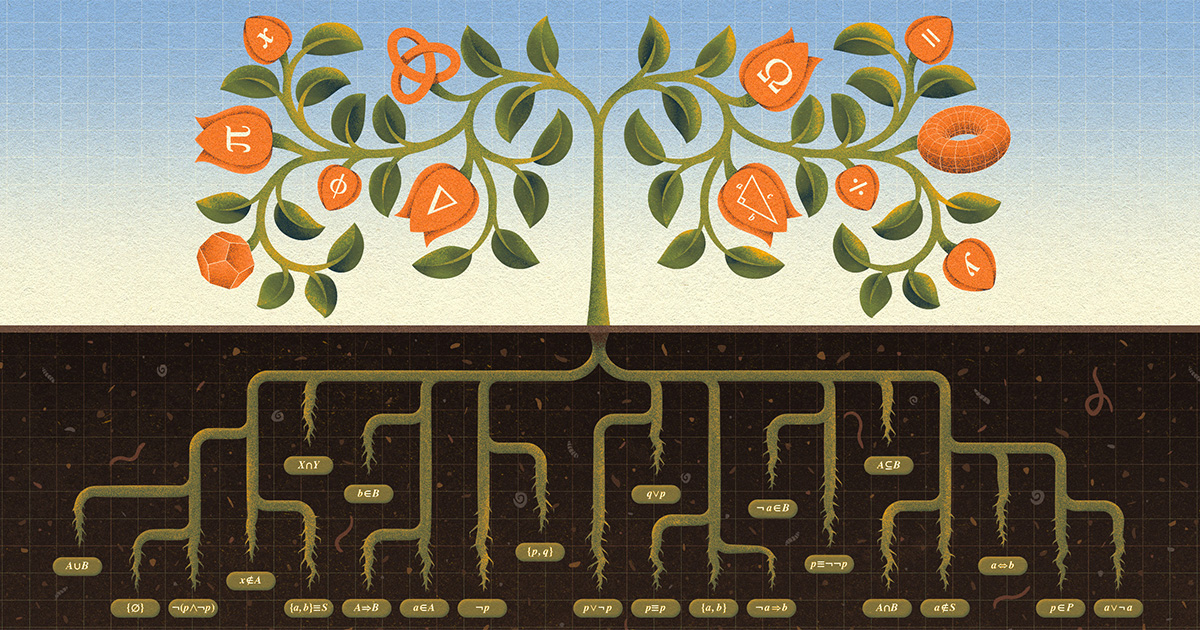
Axioms are the starting points of any mathematical system—basic statements taken to be true without proof. They serve as the bedrock upon which all other truths are built. When a mathematician proves a theorem, they rely on previously established results, which themselves rest on earlier proofs. This chain of reasoning must end somewhere; otherwise, it would regress infinitely. Axioms provide that stopping point. For example, Euclidean geometry begins with axioms like "a straight line can be drawn between any two points." These are not proven—they are accepted as self-evident or useful. By agreeing on a set of axioms, mathematicians create a common language and framework for discovering and verifying new truths.

Why is there a need for an 'ultimate' axiom?
The search for a single, ultimate axiom arises from the desire for a complete and consistent foundation for all of mathematics. Imagine a tower of proofs: theorem A depends on theorem B, which depends on theorem C, and so on. Eventually, we reach a point where no further justification exists—these are the axioms. The idea of a 'final axiom' suggests there might be one supremely powerful statement from which all mathematical truths can be deduced. In the early 20th century, mathematicians like David Hilbert hoped to find such a foundation. However, Gödel's incompleteness theorems later showed that no single axiomatic system can be both complete and consistent, dashing hopes for a truly final axiom. Nonetheless, certain axioms, like the Axiom of Choice, have been proposed as near-foundational principles.
What is the controversial 'final axiom'?
The most famous candidate for a 'final axiom'—and the one that has provoked the most controversy—is the Axiom of Choice (AC). It states that for any collection of non-empty sets, there exists a function that chooses exactly one element from each set, even if the collection is infinite and there is no clear rule for making the selection. On the surface, this seems harmless: we can intuitively 'choose' an element from each set. However, the axiom allows for the existence of objects that cannot be explicitly constructed or described. Its acceptance leads to powerful theorems but also bizarre paradoxes, making it a lightning rod for debate.
Why is the Axiom of Choice so controversial?
The controversy stems from the axiom's non-constructive nature. It asserts the existence of a choice function without providing any method to define it. This clashes with the philosophical view that mathematical objects should be explicitly constructible. Even more troubling are its consequences, such as the Banach–Tarski paradox, which uses AC to show that a solid sphere can be cut into finitely many pieces and reassembled into two spheres of the same volume. This defies physical intuition. Additionally, the axiom implies the Well-Ordering Theorem (every set can be well-ordered), which itself is counterintuitive for uncountable sets. For decades, mathematicians debated whether to accept AC, with some rejecting it outright. The controversy highlights the tension between mathematical utility and philosophical consistency.
What are the consequences of accepting the Axiom of Choice?
Accepting the Axiom of Choice unlocks a wealth of mathematical results that are otherwise unprovable. Key consequences include:
- Every vector space has a basis (even infinite-dimensional ones).
- The Cartesian product of non-empty sets is non-empty.
- Every set can be well-ordered (Well-Ordering Theorem).
- Zorn's Lemma (a powerful tool in algebra and analysis).
These theorems are foundational in fields like functional analysis, topology, and algebra. Without AC, many standard results would collapse or require alternative, often more cumbersome, proofs. However, the price is accepting non-constructive existence—a trade-off many mathematicians find worthwhile for the sake of elegance and power.
How do mathematicians decide which axioms to adopt?
Mathematicians do not have a single rule for choosing axioms. Instead, they evaluate potential axioms based on criteria like consistency (no contradictions), fruitfulness (how many useful theorems follow), intuitive appeal, and elegance. For the Axiom of Choice, most mathematicians have come to accept it because of its immense utility across many branches of mathematics. However, some prefer to work in systems that reject or limit AC, such as ZF set theory without Choice or constructive mathematics. This pluralism is healthy: different foundational choices lead to different mathematical worlds, each with its own insights. The debate over the 'final axiom' shows that mathematics is not a rigid edifice but a living, evolving discipline where foundational questions remain open.
Does the controversy mean mathematicians reject the Axiom of Choice today?
No, the vast majority of mathematicians today accept the Axiom of Choice as a standard part of set theory (in ZFC, Zermelo–Fraenkel set theory with Choice). The controversy has largely subsided because AC's benefits are seen to outweigh its philosophical drawbacks. Mathematicians are pragmatic: they use AC when needed and are aware of its implications. However, a minority of mathematicians and logicians continue to explore alternatives, such as determinacy axioms or constructive set theory. The historical debate has enriched our understanding of mathematical foundations and reminds us that even the most fundamental assumptions can be questioned.